
Guide
Knowing When Another Repair Isn't Worth It
Elgin homes built 1956-2009 hit different failure points. Here's how to tell if another repair makes sense or if it's time to replace the door.
Local detail
Where People Go Wrong
The mistake we see most in Elgin is treating every symptom as a one-time fix instead of asking what decade the door came from. A lot of the housing stock here went up between 1956 and 2009, with the bulk of it from the 1980s and 90s, so we're constantly working on doors and openers that are 25 to 40 years old. Owners will replace a broken cable, then a roller six months later, then a spring the following winter, without ever stepping back to ask if the door itself has aged out.
Each repair is reasonable on its own. Strung together over two or three years, they usually cost more than a new door and opener would have, and the old track and hardware are still wearing out underneath the new parts. If your opener predates the last two panel replacements, or if the track shows rust pitting at the rollers, you're not fixing a door anymore.
You're patching a door that's telling you it's done. That's a hard thing to hear when the last repair was only $150, but it's the honest read on a lot of the 1980s-built doors still running in this area.
The area
The Problem
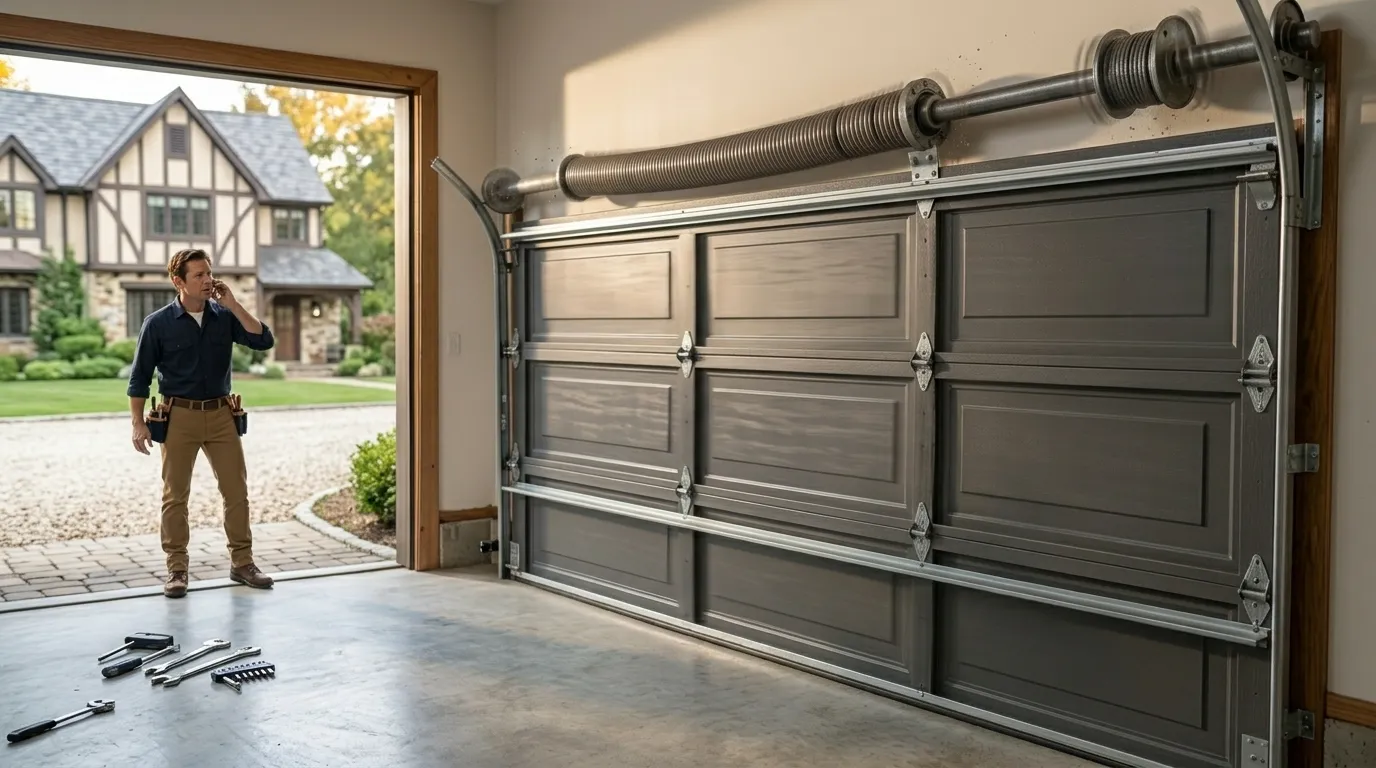
Garage doors don't fail all at once, they fail in a sequence, and the sequence tells you something. A torsion spring going first, on its own, in a door under 20 years old, is just a spring - replace it and move on. But when a spring failure shows up alongside a bent track, a worn opener drive gear, and panels that don't seal flush anymore, that's a door built in the 1986-median era finally reaching the end of its designed life together, not four unrelated problems. We can't tell you your exact door's age without seeing it, but if your house falls in Elgin's typical 1956-2009 build range and nobody's touched the door since it was installed, the math changes.
A repair that would have been sound investment at year 15 is a stopgap at year 35. The honest limitation here: we don't have a formula that tells you the exact cutoff for your specific door over the phone. What we can tell you is that replacing a spring on a door with a shot opener and a bent track just moves the next call closer.
What we find
How Local Conditions Play In
Elgin sits in a cold, moderate climate band, and that matters more for garage doors than most owners expect. Steel contracts in cold weather, and on an older door - especially one from the 1980s-90s stock that makes up most of this area - the panel seams and weatherstripping were never built to today's tolerances. A door that's marginal in October will bind, drag, or throw a cable in January, and that's usually when we get the call. Median household income across the service area runs a bit over $111,000, and a good number of owners here can absolutely afford a full replacement - the question is whether it's the smarter spend versus a repair.
On a door that's already showing multiple wear points, cold-weather stress just accelerates the decision. We're not going to tell you a new door survives winter without maintenance either way, because it doesn't. But an older door fighting the cold on top of age-related wear is a different repair conversation than a five-year-old door with one bad part.
How we work
The Seasonal Bit
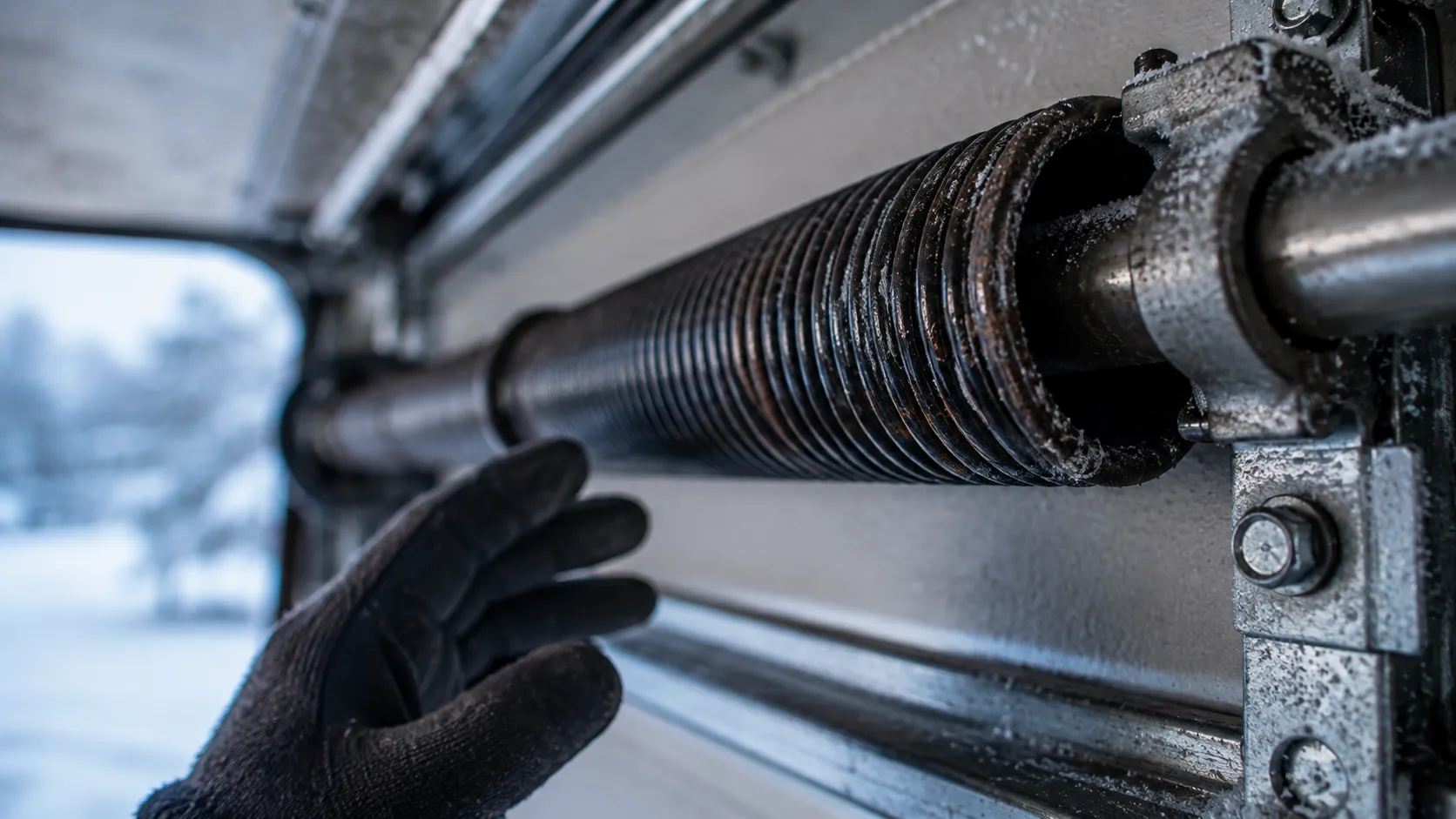
The first hard cold snap each year is when marginal doors show their hand - a spring that was 90% gone finally lets go, or a track that was slightly bent starts binding hard enough to strain the opener. If your door is from the older end of Elgin's 1956-2009 range and it struggles every winter, that's not bad luck repeating, it's the same underlying wear showing up on schedule. We'd rather tell you that in October than have you find out at 6am in January with the car stuck inside.
The flip side: a door that's only a decade or two old and just needs seasonal adjustment - lubrication, a cable tension check - doesn't need a replacement conversation at all. Not every seasonal complaint means the door is done. It means something needs a look before the cold sets in, and whether that's a $120 fix or a real replacement depends on what else is already worn on that specific door.
Questions
Common questions
How do I know if my garage door is too old to keep repairing?
Look at how many separate parts have failed in the last two to three years, not just the most recent one. If you're on your second or third repair on a door built in the 1980s or 90s - which covers most of Elgin's housing stock - and the opener is original too, you're usually past the point where another repair pays off.
Does Elgin's winter weather actually shorten a garage door's life?
Cold stresses steel and old weatherstripping more than owners expect. In our cold, moderate climate band, a door that's already worn will usually show it first at the start of winter - binding, dragging, or a spring finally letting go. It doesn't ruin a sound door, but it exposes one that was already marginal.
Is it cheaper to keep fixing an old door than replacing it?
Sometimes, if the failures are isolated and the door is structurally sound. But once you're replacing springs, cables, and rollers within the same year or two on an older door, the repair costs stack up past what a new door and opener would have run. We can't give you a number without seeing the door.
What's a sign my garage door repair isn't going to hold?
If the new part is going on top of a bent track, a pitted rail, or an opener that's already straining, the repair will hold for a while but won't fix the underlying issue. We'll tell you when that's the case instead of just doing the job and letting the next failure surprise you.
Ready when you are
Need a garage door sorted in Elgin?
Elgin Garage Door Pros repairs and installs garage doors, springs and openers in Elgin, IL and the surrounding area.