
Guide
What Wind Does to a Wide Door in Elgin
Why 16-foot doors on Elgin's 1956-2009 housing stock take wind different than a single door, and what the cold moderate climate here does to that hardware over time.
Local detail
Where People Go Wrong
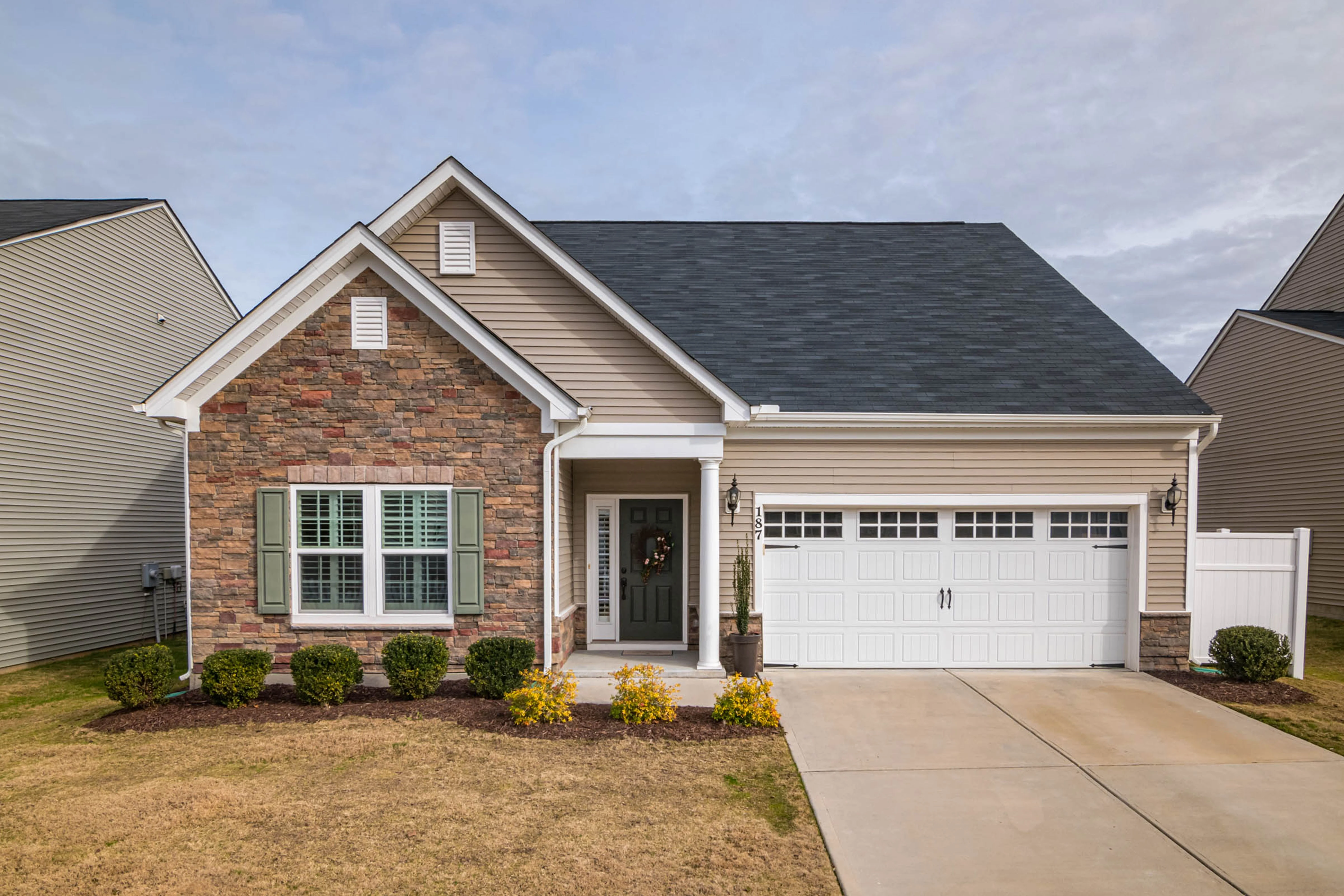
Most of the calls we get on wide doors start the same way: someone treats a 16-foot double door like it's just a bigger version of a single-car door. It isn't. Elgin's housing went up mostly between 1956 and 2009, with the median build year landing around 1986, and that generation of builder-grade double doors used one wide panel instead of two singles flanking a center post.
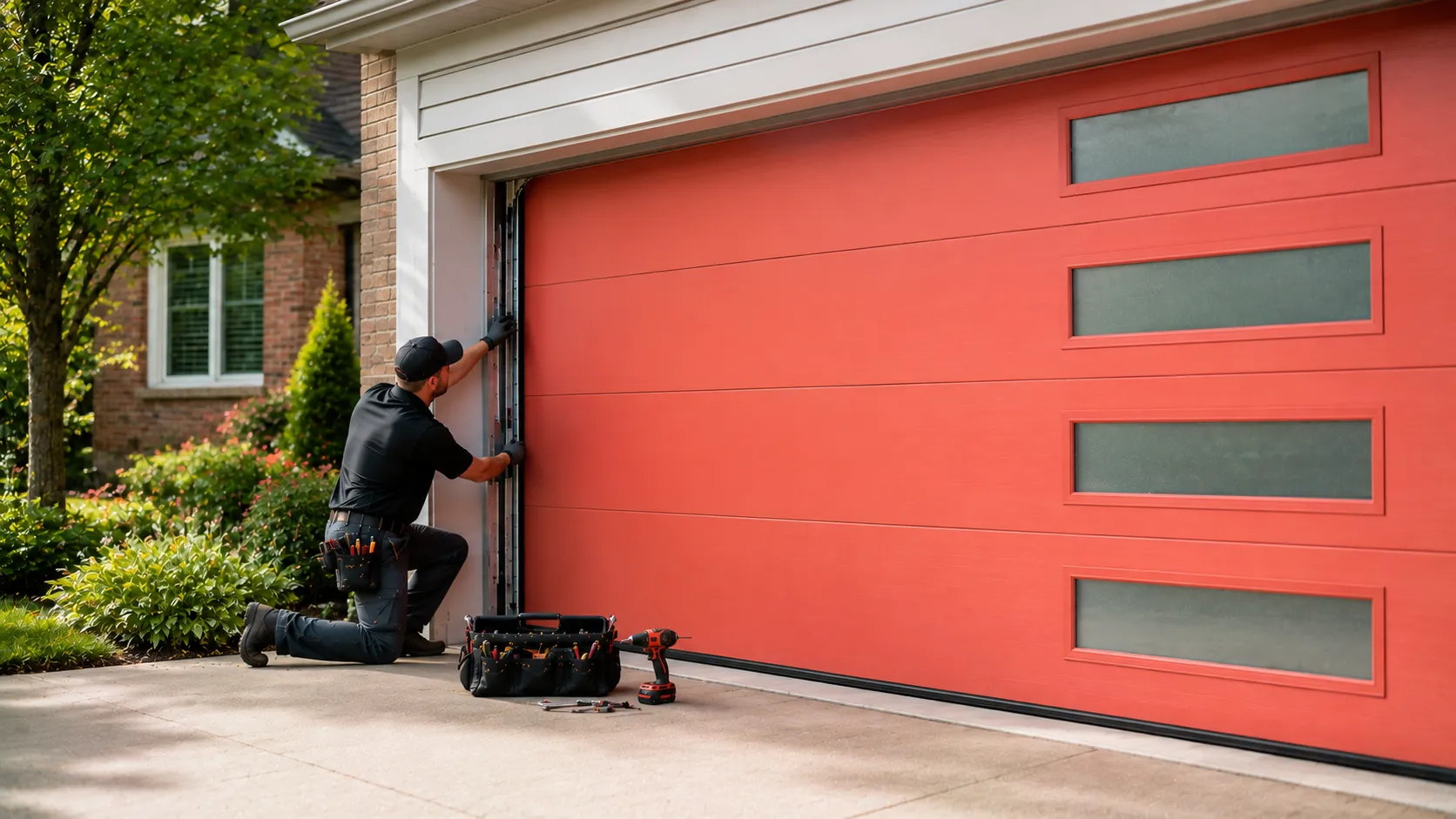
A single wide span has nowhere to transfer sideways load. When wind pushes on it, the whole panel has to absorb that force on its own, and the original steel from that era is often thinner gauge than what goes in today. Homeowners in these houses tend to assume the door is fine because it looks fine - no dents, no rust through the skin - without ever checking whether the horizontal struts across the back of the panel are still doing their job.
On a door pushing 35-40 years old, those struts have usually loosened at the bracket, not broken outright, which is exactly the kind of failure you can't see from the driveway. That's the gap: the door looks original and solid, but the bracing that keeps a wide span rigid under load was never built to modern wind standards, and nobody's checked it since it went in.
The area
The Problem
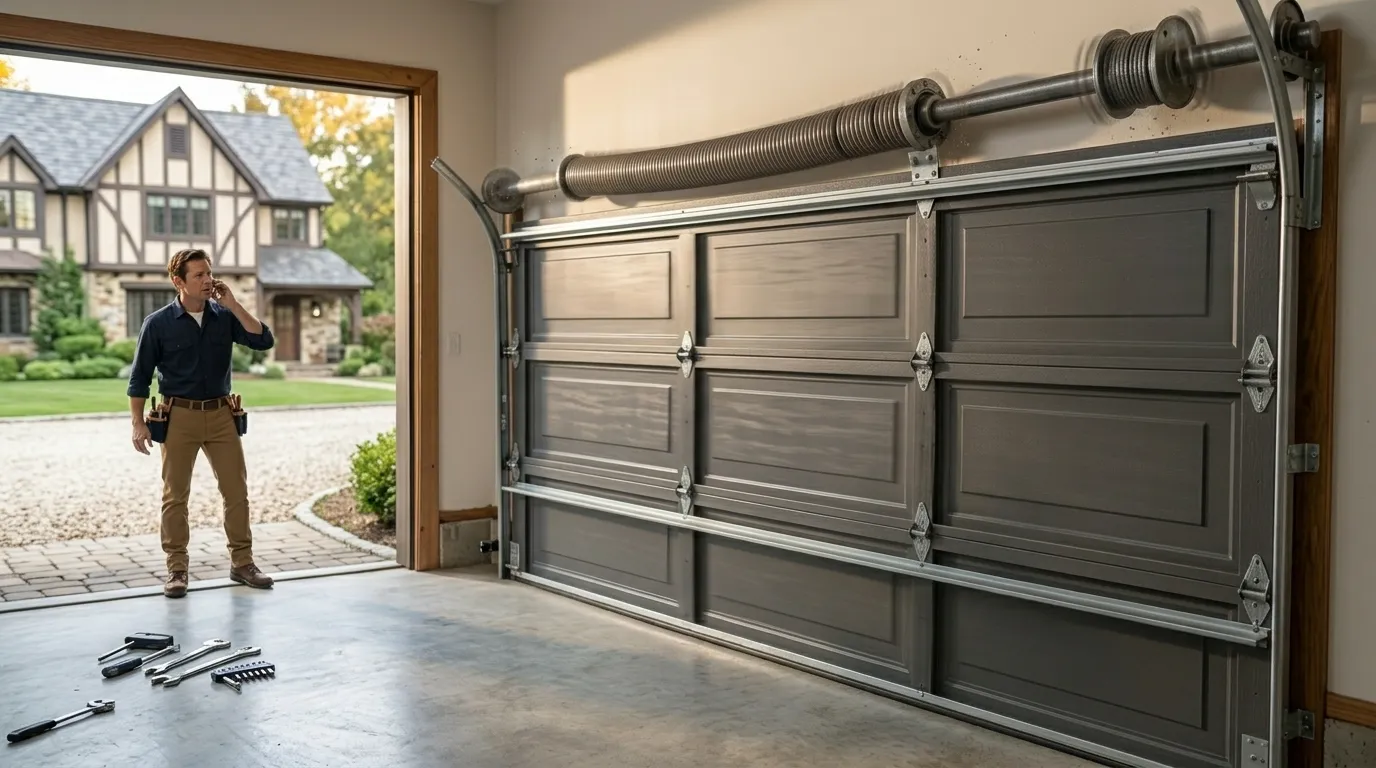
A wide door flexes more than a narrow one under the same gust, simple as that - longer span, same material, more bow in the middle. Repeated flex works the same way metal fatigue always does: a little give this time, a little more next time, until a roller pops out of the track or a strut bracket pulls loose from the panel. On the doors common to Elgin's 1980s-and-90s stock, we see this show up first at the top corners, where the wind load transfers into the track and the track pulls away from the jamb a fraction of an inch.
It's rarely dramatic. Usually it's a door that's started rattling harder than it used to, or one that catches a little on the way down. Left alone, that fraction of an inch becomes an eighth of an inch, and eventually the track separates enough that the door comes off it entirely - not on some freak day, just on an ordinary windy afternoon when the door happens to be caught halfway open.
The honest limit here: if the track is already bent or the panel has visible bow with the door closed, a strut kit is a band-aid, not a fix. At that point replacement is the straight answer, not another repair.
What we find
How Local Conditions Play In
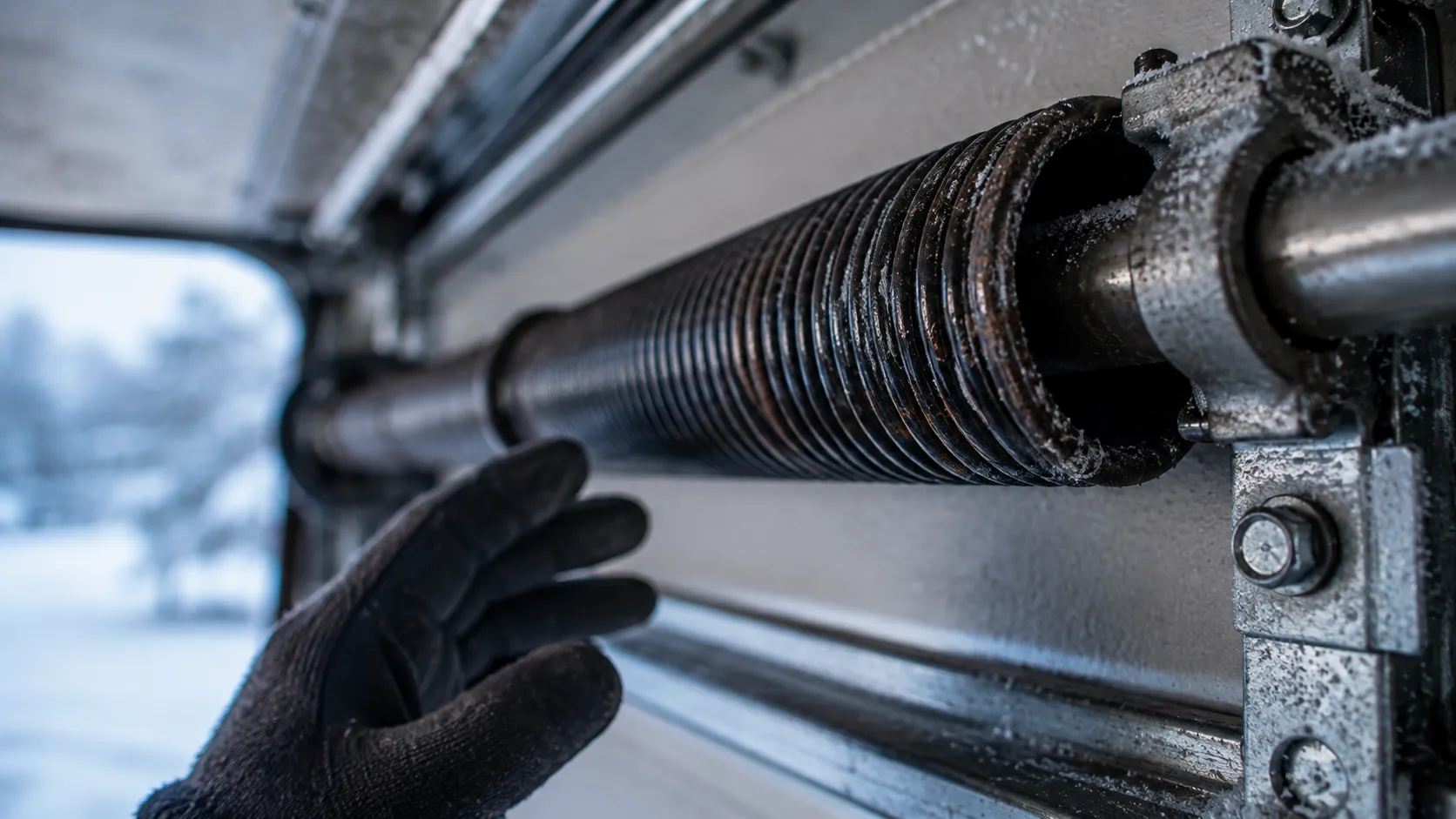
Elgin sits in a cold moderate climate band, and that matters for a wide door in a way people don't expect - it's not just about summer storms. Steel contracts in cold weather. Every winter, the track brackets, the hinges between panels, and the roller stems go through a real temperature swing, and every swing loosens the fasteners on a wide door a tiny bit more than it would on a narrower one, because there's more panel mass pulling on each connection point.
That's the mechanism behind why a door that was quiet in September starts banging in its track by January - it's not the cold itself, it's the cold working on hardware that's already carrying more load than a single-car door's hardware does. Across the roughly 171,218 owner-occupied houses in this service area, most attached garages face the street or a side yard with nothing blocking a straight gust, which is exactly the geometry that stresses a wide door most. None of this means a wide door is a bad idea - it's the standard configuration on two-car and three-car garages throughout the area - it means the hardware needs a look on a schedule, not just when something already sounds wrong.
How we work
The Seasonal Bit
The pattern we see locally is straightforward: wind problems on wide doors show up worst in late fall and winter, right when the cold has already loosened hardware and the wind picks up ahead of a front. That's the overlap - a door that could probably handle either condition on its own gets pushed past its margin when both hit in the same week. If you've got a 16-foot door original to a house built anywhere near that 1956-2009 range, the thing worth doing before the cold sets in is a strut and bracket check, not a full teardown.
Tighten what's loose, replace a bent strut before it's a broken one, and check that the track fasteners are still seated in the jamb. That's a shorter job than most people expect, and it's the difference between a door that rattles and a door that comes off its track. We won't recommend a full panel swap on a door that just needs its hardware tightened - that's money you don't need to spend - but we also won't tell you a strut kit will hold a track that's already pulled away from the wall.
Questions
Common questions
Is my original 1980s double door strong enough for wind, or does it need reinforcement?
Most doors from Elgin's 1980s-90s building boom weren't built with the strut bracing you'd see on a door today. If yours has never had struts added or checked, that's the first thing worth doing - not a full replacement, just a hardware check to see what shape the bracing and brackets are actually in.
Why does my garage door rattle more in winter than summer?
Cold contracts the metal in your track brackets and hardware, and that loosens fasteners a little more each freeze-thaw cycle. On a wide door, that loosened hardware is carrying more panel weight and more wind load than a narrow door's would be, so the rattle shows up there first.
Can a strut kit fix a wide door that's already bowing?
Only if the track and jamb brackets are still sound. If the panel is visibly bowed with the door closed, or the track has already pulled away from the wall, a strut kit is a temporary fix at best. At that point we'll tell you straight that replacement is the better spend.
How often should I check the hardware on a wide garage door?
Once a year, ideally before winter, is enough for most doors in this area. Check that strut brackets are tight, rollers are seated, and the track hasn't pulled from the jamb. It's a short check that catches the kind of loosening cold weather causes before it turns into a bigger repair.
Ready when you are
Need a garage door sorted in Elgin?
Elgin Garage Door Pros repairs and installs garage doors, springs and openers in Elgin, IL and the surrounding area.