
Guide
Why Elgin Garage Doors Lose Sensor Alignment Over Time
Elgin homes built 1956-2009 sit on slabs that move with the cold. Here's why that shifts your garage door sensors and how to spot it before it fails you.
Local detail
Where People Go Wrong
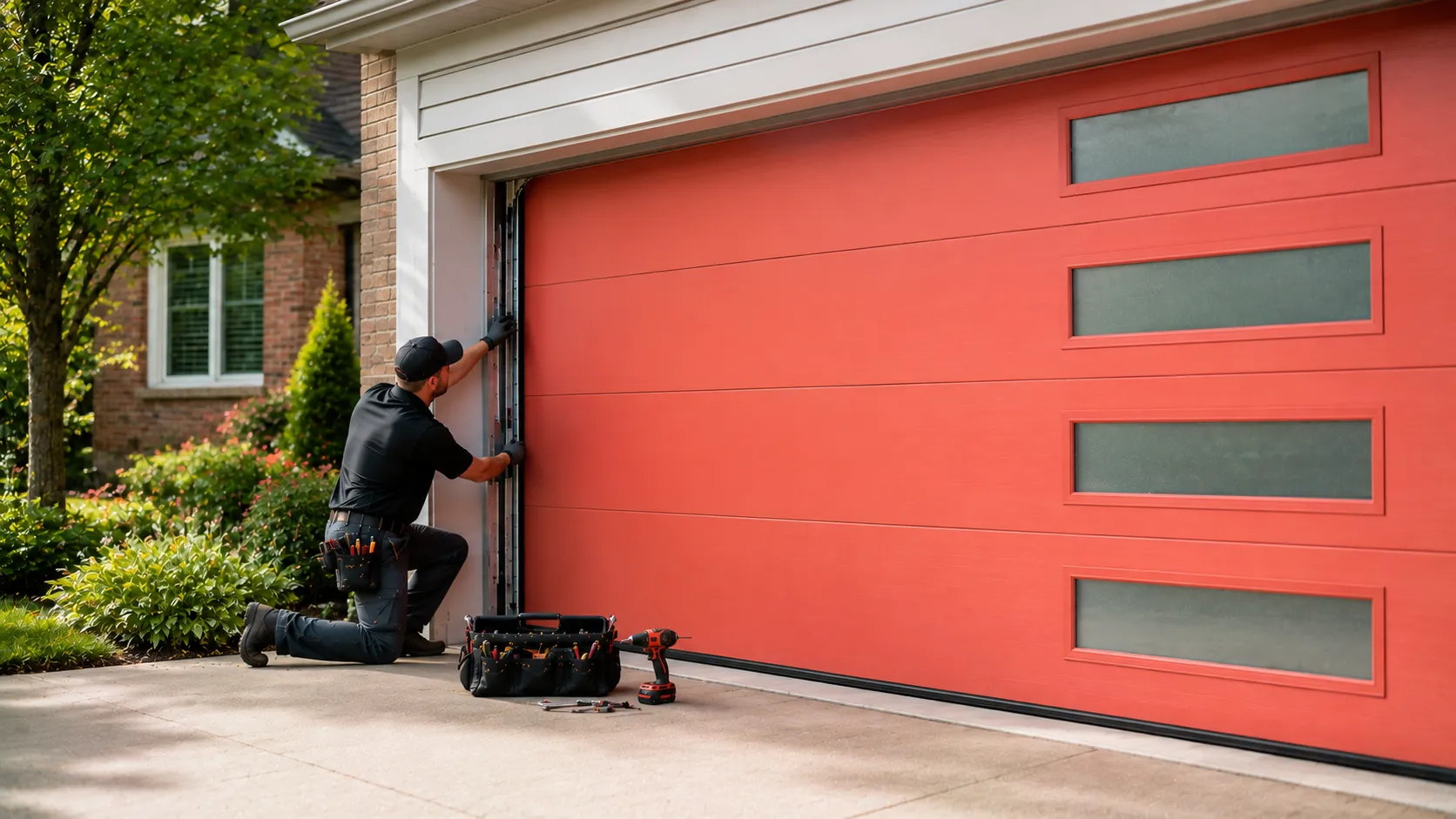
Most calls we get about a door that won't close start the same way: the owner assumes the opener is dying. Nine times out of ten it's the safety sensors - the two small eyes low on each track that have to see each other in a straight line or the opener refuses to shut the door. People chase the wrong fix. They replace bulbs, reset the opener, sometimes replace the whole unit, when the actual problem is a bracket that's a quarter-inch out of true.
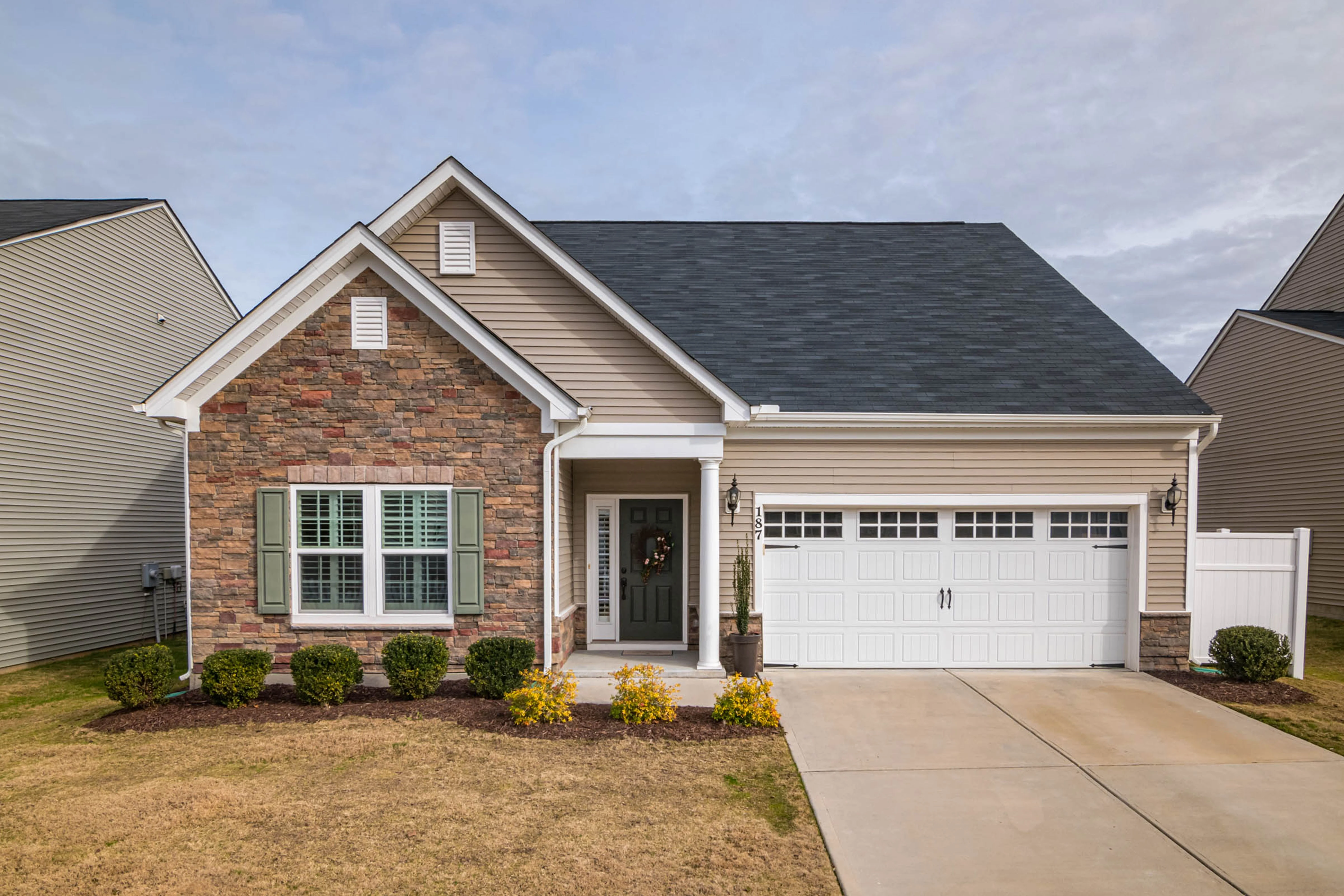
With most Elgin-area houses built between 1956 and 2009 and a solid chunk of that stock going up in the 1980s and 90s, you're dealing with sensor brackets and wiring runs that have had two or three decades to shift. Nobody notices a slow drift. You notice the day the door won't close at all, which is usually the worst possible day to notice it.
The area
The Problem
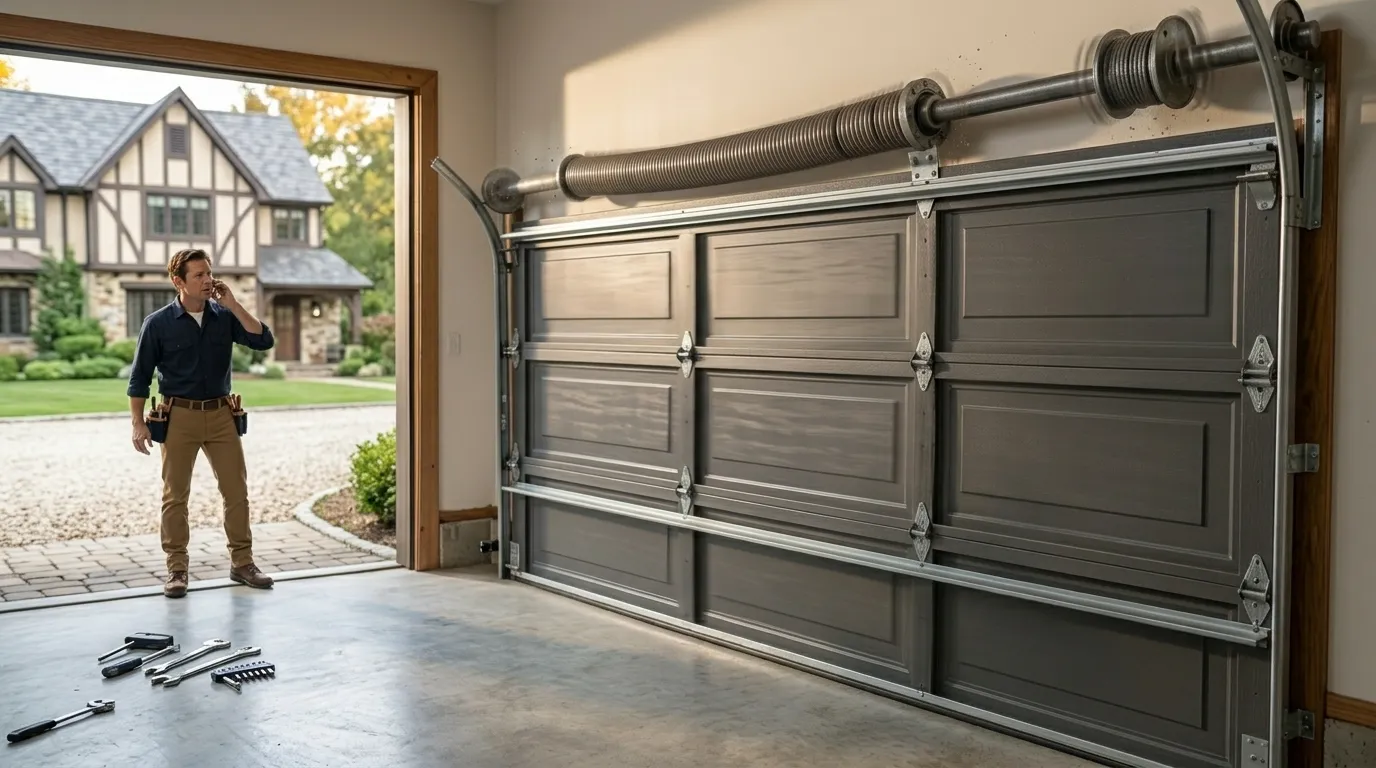
Sensors don't fail all at once, they drift. The brackets are bolted to the track, and the track is bolted to studs or a slab-mounted jamb. Any small movement in that mounting - a fraction of a degree - throws the beam off enough that the receiving eye stops seeing a solid signal.
A garage built in 1986, which lines up with the median build year across this area, likely still has its original steel brackets, bent slightly out of true by years of temperature swings and the occasional bump from a bike or a ladder. The door still looks fine. It still opens.
It's the closing cycle that starts acting up, because that's the one that depends on the sensors seeing a clear beam the whole way down. Once the eyes are off by more than a little, the door reverses partway down, or refuses to leave the top of the track at all.
What we find
How Local Conditions Play In
This region sits in a cold-moderate climate band, and that matters more for sensor alignment than most owners expect. It's not the cold itself doing the damage - it's the freeze-thaw cycle moving the slab under the door a small amount every winter. A garage floor that heaves and settles even a sixteenth of an inch changes the angle of the jamb the bracket is bolted to.
Across the 61 named areas that make up this service territory, the pattern repeats: older bracket, shifted slab, misaligned eye. Houses on poured slabs from the 1980s and 90s tend to show this more than newer builds, simply because they've been through more winters. We don't reset sensors as a one-time fix and call it done - if the slab keeps moving, the alignment keeps drifting, and that's a fact about frost heave, not about the sensor itself.
How we work
The Seasonal Bit
The worst week for sensor calls tends to follow the first hard freeze-thaw stretch of the year, not the depth of winter itself. That's when whatever settling happened over the fall finally shows up as a beam that's just barely off. If your house falls in that 1956-2009 build window, the odds are decent your sensors have never been re-aligned since the door was first installed - most owners never touch them until the door stops working.
One thing worth saying plainly: if the bracket itself is rusted through or the track is bent, realigning the sensor is a short-term patch, not a fix. At that point you're better off replacing the bracket outright than fighting the same drift again next winter.
Questions
Common questions
Why does my garage door reverse halfway down instead of closing all the way?
That's almost always the safety sensors seeing a broken or angled beam partway through the cycle. The opener is designed to treat any interruption as an obstruction and reverse. It's rarely the motor - check the two eyes at the bottom of the track first.
Can I realign the sensors myself?
Often yes. Loosen the wing nut on each bracket, aim both eyes so their small indicator lights go solid instead of blinking, then retighten. If they won't hold alignment after retightening, the bracket or slab movement is likely the real issue.
Why does this seem to happen every winter?
In this climate band, the slab under your garage door shifts slightly with each freeze-thaw cycle. That movement changes the angle of the bracket mounted to it, which is enough to throw off a beam that has to travel several feet in a straight line.
Ready when you are
Need a garage door sorted in Elgin?
Elgin Garage Door Pros repairs and installs garage doors, springs and openers in Elgin, IL and the surrounding area.