
Guide
What your garage door is trying to tell you
Grinding, popping, or slapping doors in Elgin homes built 1956-2009 usually point to specific worn parts. Here's what each sound means before winter cold makes it worse.
Local detail
Where People Go Wrong
Most Elgin homeowners wait until the door won't open at all before calling anyone, but by then the noise that started weeks earlier already told the story. Elgin's housing stock runs 1956 to 2009, with the bulk of it going up in the 1980s and 90s, which means a lot of doors and openers in this town are original or close to it. A squeal from a mid-80s build usually means dry rollers on hardware that's never been lubricated, not a dying opener. A rhythmic thump on a 90s-era door is often a bent track section that's been rubbing for months, quietly getting worse.
The mistake is treating every noise as "the opener is going." Openers are the easy diagnosis, so people jump there first. But the opener just moves the door; it doesn't cause most of the racket. Rollers, hinges, springs, and cable drums make the actual noise, and those parts wear on a schedule tied to how old the house is and how many winters the door's been through. Guessing at the wrong part means a wasted trip to the hardware store and the same noise a week later.
If you're not sure, listen for where the sound happens in the cycle - right at opening, midway, or right at close - and note it before you call. That alone cuts diagnosis time in half.
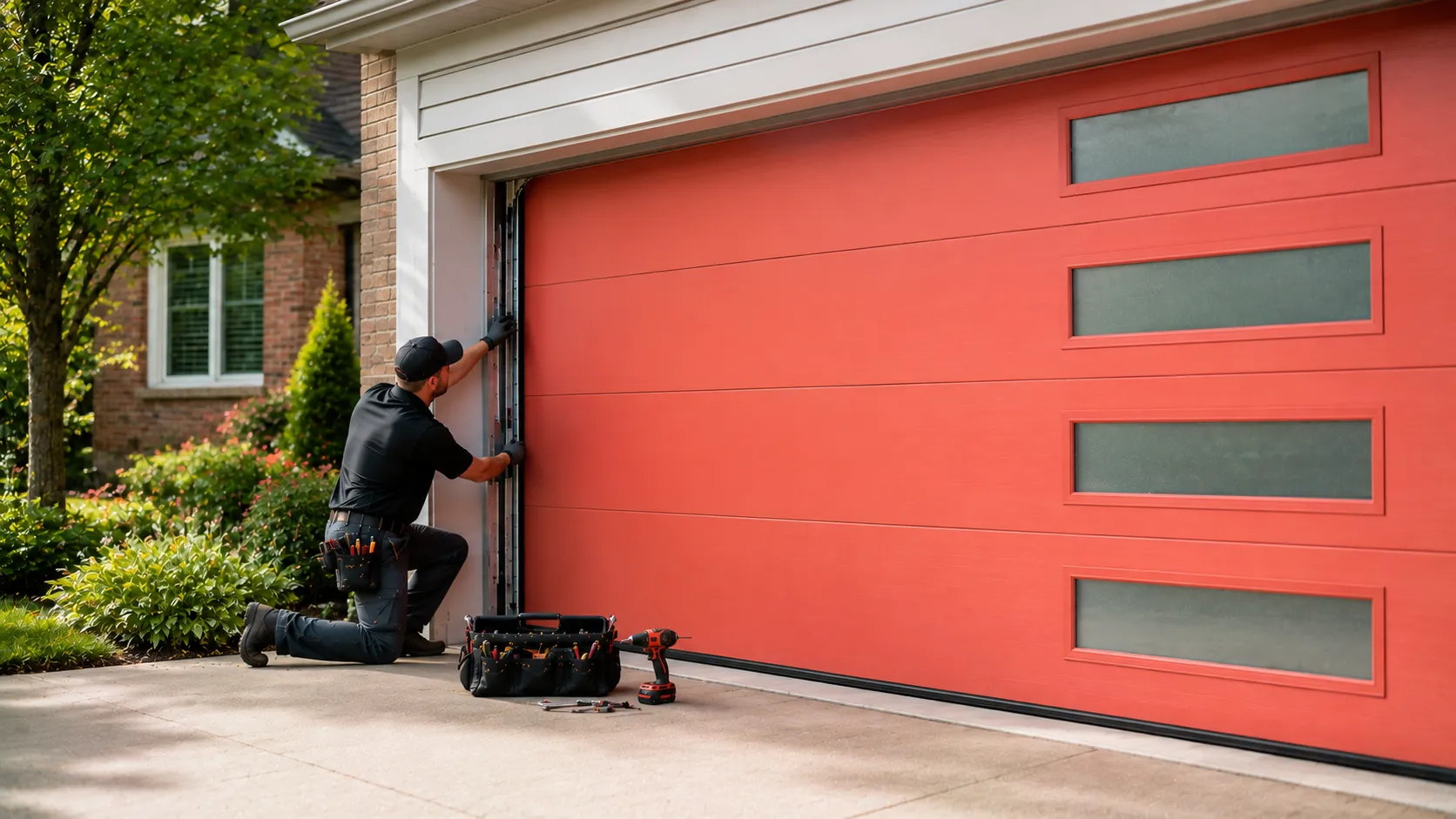
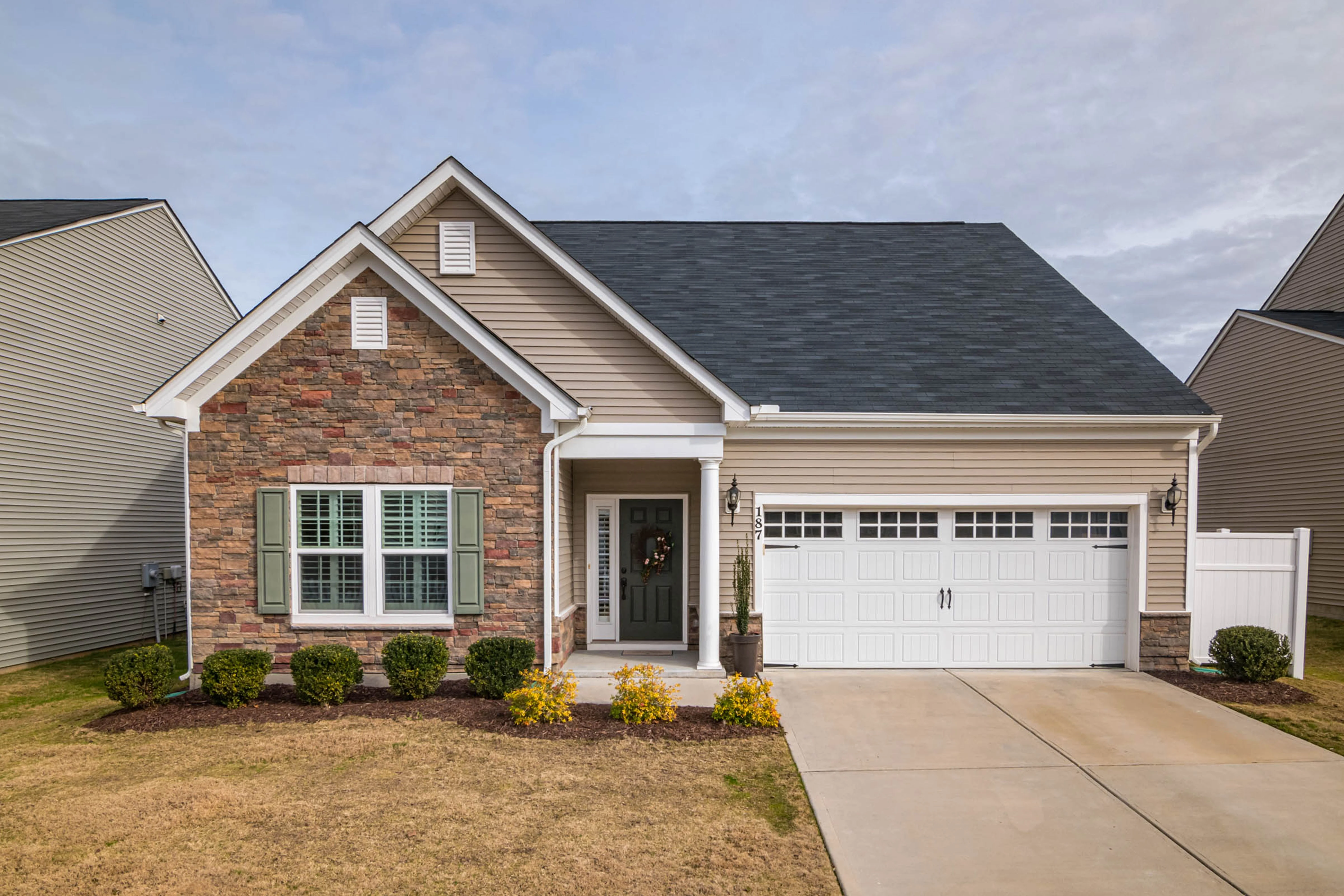
The area
The Problem
A door that's 20 to 40 years old, which describes a large share of doors across Elgin given the 1956-2009 build range, has steel parts that have gone through decades of temperature swings. Steel contracts in cold and expands in heat, and every cycle loosens a fastener a fraction more. On a 1980s-built house, that's been happening for 40-plus winters. The result isn't one big failure - it's a slow accumulation of slack in hinges, play in the roller stems, and glazing on the spring coils that used to be smooth.
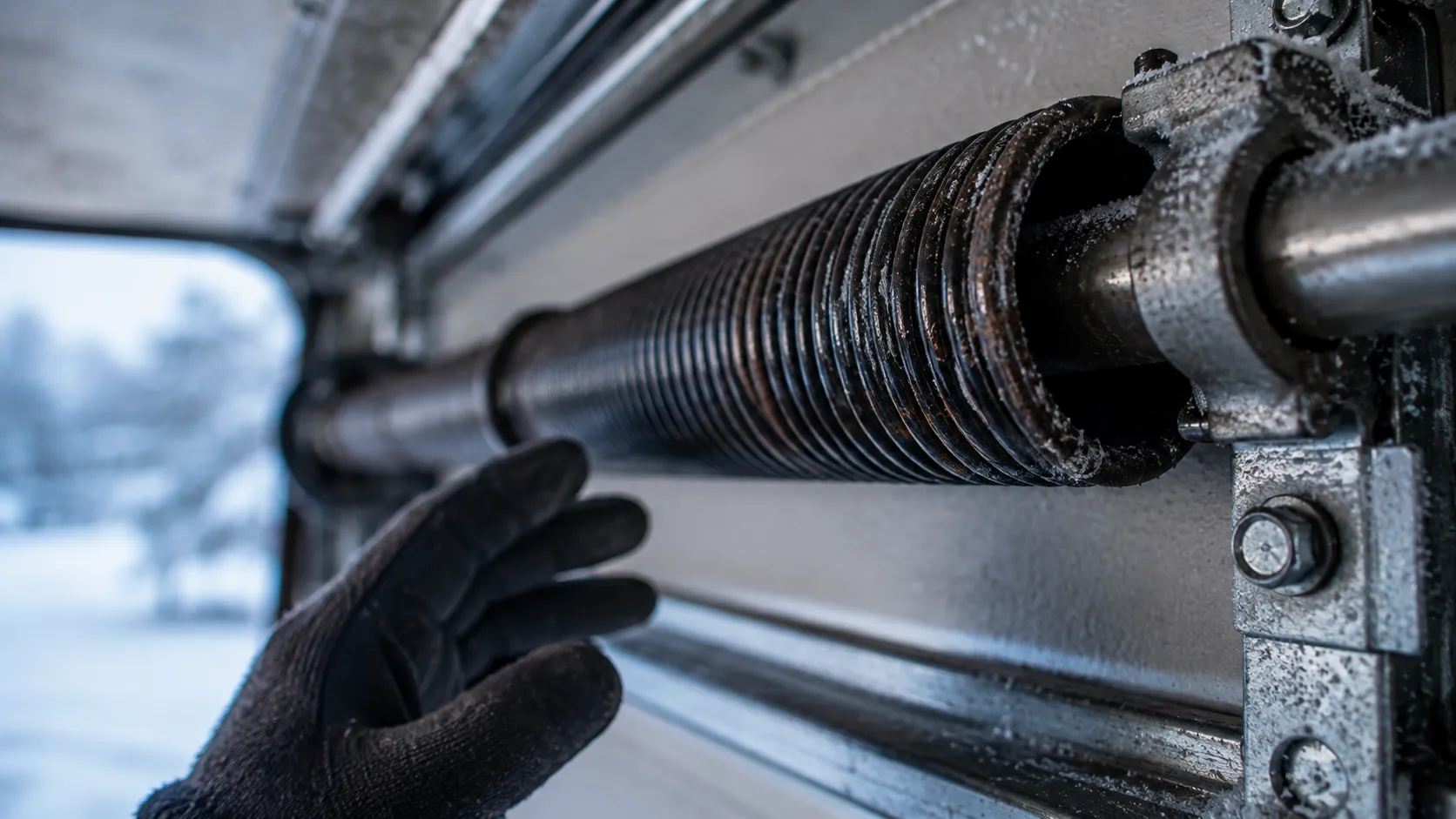
The noises are the accumulation becoming audible. A single sharp pop usually means a hinge or bracket flexing under load it wasn't designed for anymore. A steady grind, especially near the top of the track, points to a roller that's worn oval instead of round. A metallic scrape on the way down is very often the spring rubbing against its own coil because the winding cone shifted.
None of these sounds are cosmetic. Every one of them is a part failing at a predictable rate, and on the doors in Elgin's older sections - the ones going back toward 1956 rather than 2009 - that rate has usually caught up. The honest limitation here: I can't tell you which part from a description alone. A five-minute look at the door in person beats any phone diagnosis.
What we find
How Local Conditions Play In
Elgin sits in a cold moderate climate band, and that matters more for noise than most people think. Cold doesn't just make steel brittle - it changes the viscosity of whatever grease is left on the rollers and hinges, so the same worn part that was quiet in August starts complaining in November. That's why a lot of the calls about screeching doors cluster once temperatures drop, even though the wear itself has been building all year.
Across the towns near Elgin - South Elgin, Sleepy Hollow, West Dundee, and the rest out to Batavia - the housing ages are similar enough that the same pattern holds: doors built in the 80s and 90s boom years are now old enough that hardware lubrication and worn rollers are the leading cause of new noise complaints each fall, not opener failure.
A door that was silent all summer and starts groaning the first cold week isn't coincidence. It's the grease thickening on parts that were already past their service life. Lubricating in October, before the first hard freeze, catches a lot of this before it becomes a stuck door on a 10-degree morning.
How we work
The Seasonal Bit
The pattern in this climate band is consistent enough to plan around: noise complaints rise as temperatures fall, then spike again on the first genuine cold snap, because whatever slack existed in warm weather turns into a bind once metal contracts and old grease seizes up. If your door has been quiet since spring and starts making a new sound in October or November, that's not a coincidence - it's cold exposing wear that was already there.
The fix depends on what's making the noise, and that's where a phone guess falls short. A worn roller needs replacing, not oiling. A loose hinge needs a bolt torqued, not lubricant. Spring noise, in particular, isn't a DIY lubrication job - springs under tension are the one part on the door that can hurt you if you get it wrong, and that's the honest limit here: I'll look at rollers, hinges, tracks, and openers all day, but a spring swap on an older door needs to be done by someone who does it for a living, every time.
Catching the sound in October instead of ignoring it through December saves a cold-morning breakdown later.
Questions
Common questions
My garage door started squeaking only after it got cold. Is that just the temperature?
Partly. Cold thickens old grease and makes worn rollers bind more than they did in summer, so a marginal part that was tolerable in August becomes noisy in November. The wear was already there; cold just exposed it. Lubricating before the first freeze usually quiets it down, but if the noise is a grind rather than a squeak, a roller may already be worn oval and need replacing, not oiling.
My house was built in the 1980s. Does that matter for the noise?
Yes. A lot of Elgin's housing dates to that decade, and hardware from that era has usually gone 30-plus years without full replacement. Hinges loosen, roller stems wear, and spring coils lose their smooth finish over that many winters. The age of the house is a decent predictor of which parts are due, even if the door looks fine from the driveway.
Is a popping sound as bad as a grinding sound?
They mean different things. A sharp pop is often a hinge or bracket flexing under load, which can wait a little but shouldn't be ignored. A steady grind usually means metal-on-metal contact from a worn roller or shifted spring cone, and that tends to get worse fast, especially once cold weather sets in.
Ready when you are
Need a garage door sorted in Elgin?
Elgin Garage Door Pros repairs and installs garage doors, springs and openers in Elgin, IL and the surrounding area.