
Guide
A Broken Spring in Elgin Doesn't Wait for Spring
Why Elgin's 1956-2009 housing stock and cold winters make torsion springs fail without warning, and what to check before you call for a repair.
Local detail
Where People Go Wrong
Most owners in Elgin treat a stiff, noisy door as something to live with until it seizes completely. That's backwards here. A big share of the houses in this service area went up between 1956 and 2009, with the bulk of that stock dating to the 1980s and 90s, which means a lot of doors are still running on the torsion springs that came with the house or the first replacement set from decades back.
Steel fatigues on a cycle count, not a calendar, and cold makes the metal less forgiving right at the point it's already worn thin. Waiting for a full snap instead of addressing a door that's clearly working harder than it used to is the single most common mistake we see. The other one: assuming a slow-closing or uneven door is an opener problem.
Nine times out of ten in a house from this era, it's the spring losing tension, not the motor losing power. Adjusting the opener's force setting to compensate just hides the real issue and puts more strain on the drive gear. If a door built in the 80s or 90s starts feeling heavy to lift by hand with the opener disconnected, that's the spring talking, and it's talking in a colder voice every winter.
The area
The Problem
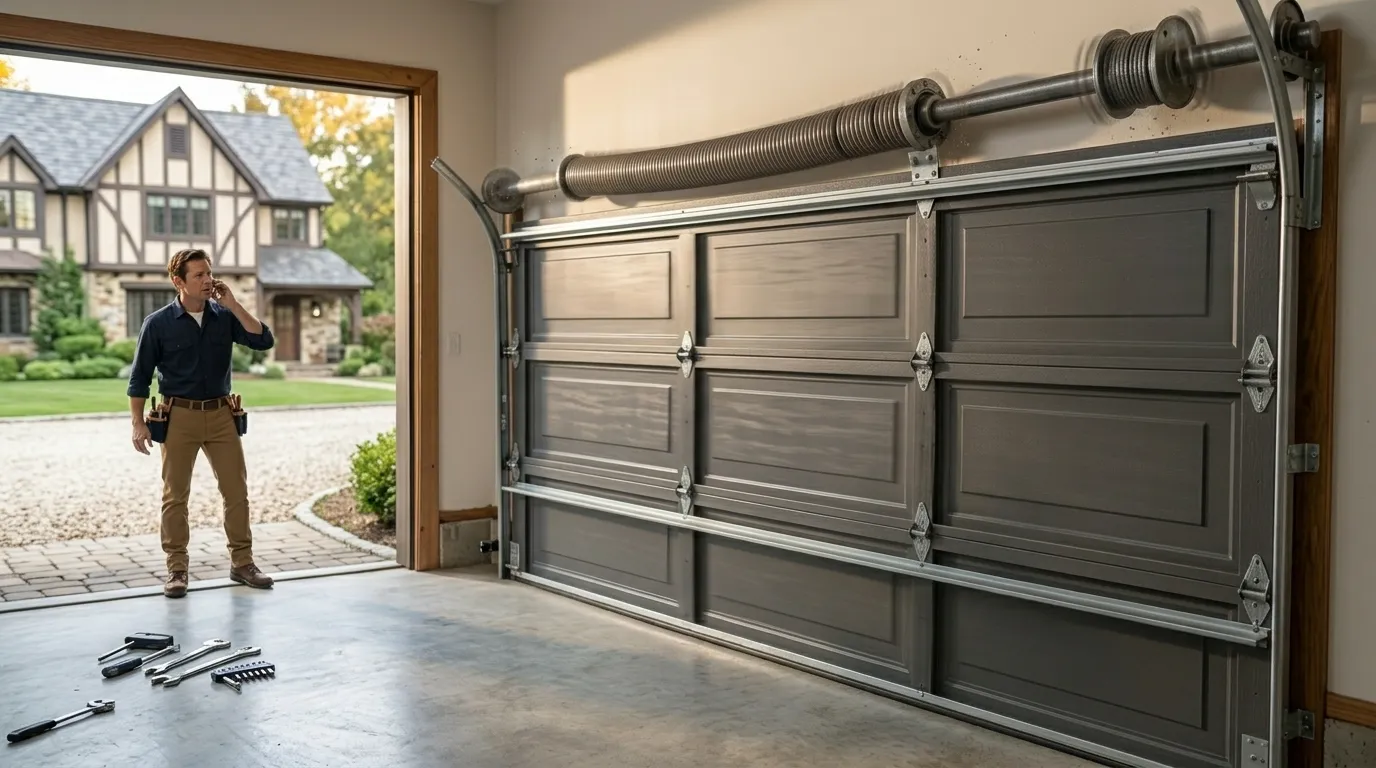
A torsion spring stores energy by twisting, and twisted steel gets brittle as it cools. In a cold-climate band like this one, a spring that's been flexing for twenty-plus winters on a house built in the 1980s or 90s has already absorbed thousands of open-close cycles in temperature swings the original coil wasn't rated to last forever against. The failure point is usually where the spring is already thinnest from fatigue, and cold is what pushes it past the edge instead of just making it groan. This isn't a defect specific to one brand or one bad batch of doors.
It's what happens to any spring old enough to have started life alongside a house from Elgin's main building era. The honest limitation here: we can't tell you a spring will last exactly X more winters, because cycle count and how the door's been maintained matter as much as age. What we can tell you is that a spring pushing 20-plus years in this climate band is living on borrowed time, and the borrowed time gets shorter every degree the mercury drops.
What we find
How Local Conditions Play In
Elgin sits in a cold-moderate climate band, which means the swing from a mild fall day to a hard freeze can happen inside a single week. That swing matters more to a garage door spring than steady cold ever would, because it's the repeated contraction and expansion that finds the weak spot in the coil. Houses built in the wave that runs from the mid-1950s through the 2000s across this area weren't built with insulated garages as standard, so an unheated garage bay lets the spring sit at close to outdoor temperature all winter, with no buffer.
That's different from a heated attached space, and it's the reason the same spring, on the same house, fails in January far more often than in July. If your garage backs onto an unheated space and the door dates back with the house, the spring has had zero relief from the cold for every winter it's been up there.
How we work
The Seasonal Bit
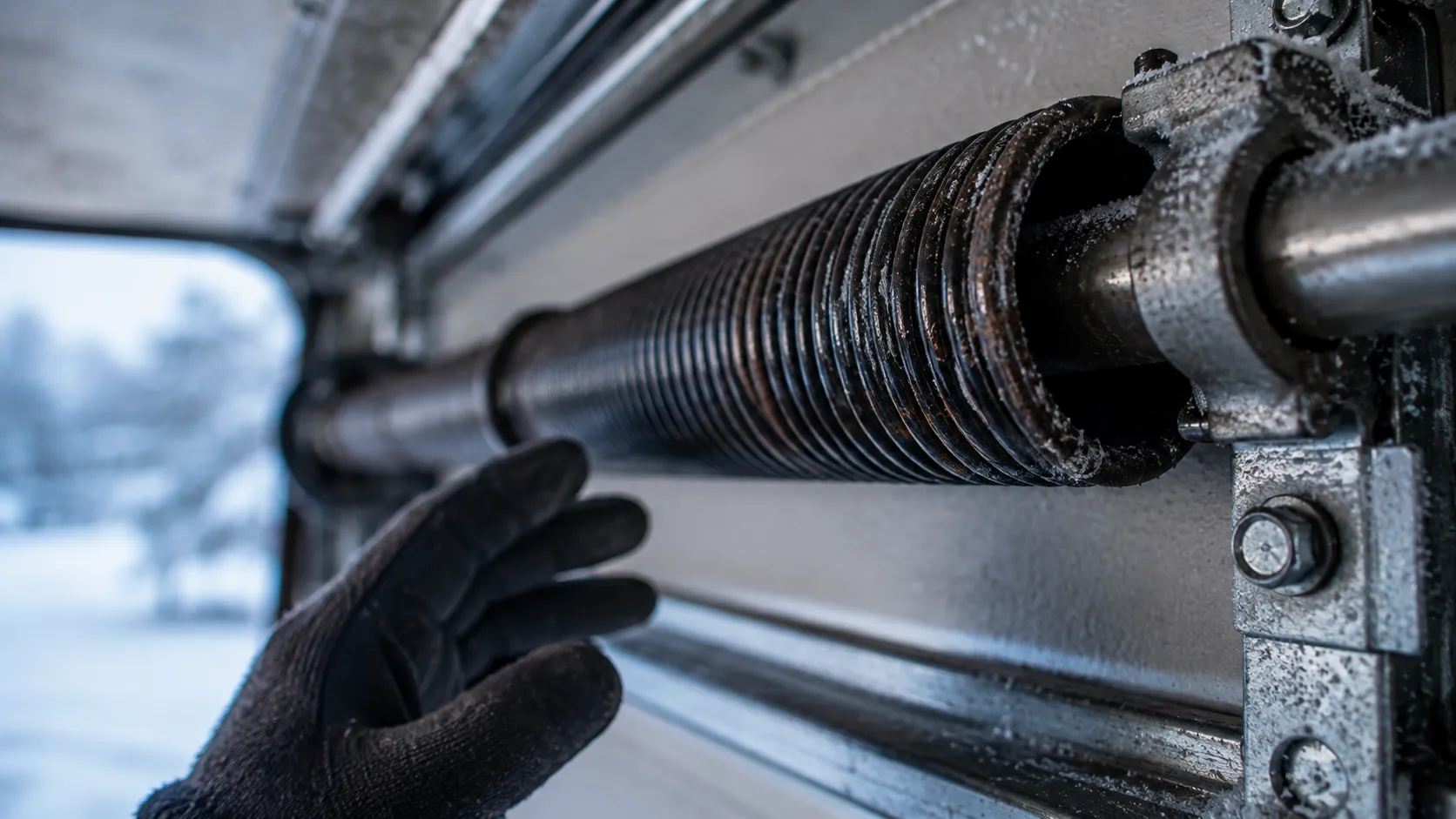
The failures cluster in the same stretch every year: the first real cold snap after a stretch of mild weather, usually once temperatures hold below freezing for more than a day or two. That's when a spring that's been degrading quietly all year finally gives out, often on the first cold morning when everyone's in a hurry to leave. If your door is original to a house built anywhere in that 1956-2009 range that makes up most of this area's stock, or you simply don't know when the spring was last replaced, the smart move is having it checked before the first hard freeze, not after it snaps in your driveway at 15 degrees.
We won't tell you a maintenance check will make a 30-year-old spring young again. What it will do is tell you whether you're looking at a season of use left or a season of risk.
Questions
Common questions
Why do springs break more in winter in Elgin than in summer?
Cold makes steel less flexible, so a spring already worn from years of cycling is more likely to reach its breaking point when temperatures drop. With Elgin's cold-moderate climate swinging between mild spells and hard freezes, that stress happens repeatedly through the season, which is why failures cluster in the coldest stretches.
My house was built in the 1980s. Is the spring original?
It's possible. A large share of homes across this service area date from the 1980s and 90s, and if nobody's mentioned a spring replacement, it may still be the original set. A spring that old, especially in an unheated garage, is well past the point where we'd recommend waiting for it to fail.
Can I just wait until it breaks and call then?
You can, but a broken torsion spring under tension is dangerous to deal with yourself, and a snapped spring on a cold morning usually means the door won't open at all until it's fixed. Checking it ahead of the first hard freeze costs less time and stress than an emergency call.
Ready when you are
Need a garage door sorted in Elgin?
Elgin Garage Door Pros repairs and installs garage doors, springs and openers in Elgin, IL and the surrounding area.