
Custom track section fit
Bent track that's kinked badly enough to need a full replacement section runs longer because we're cutting and drilling to match the original hole pattern.
Carpentersville, Elgin
Carpentersville homes built mostly in the late 1970s run extension-spring, roller-track hardware that jumps track differently than newer torsion setups. We drive out from Elgin to fix it.
On the truck
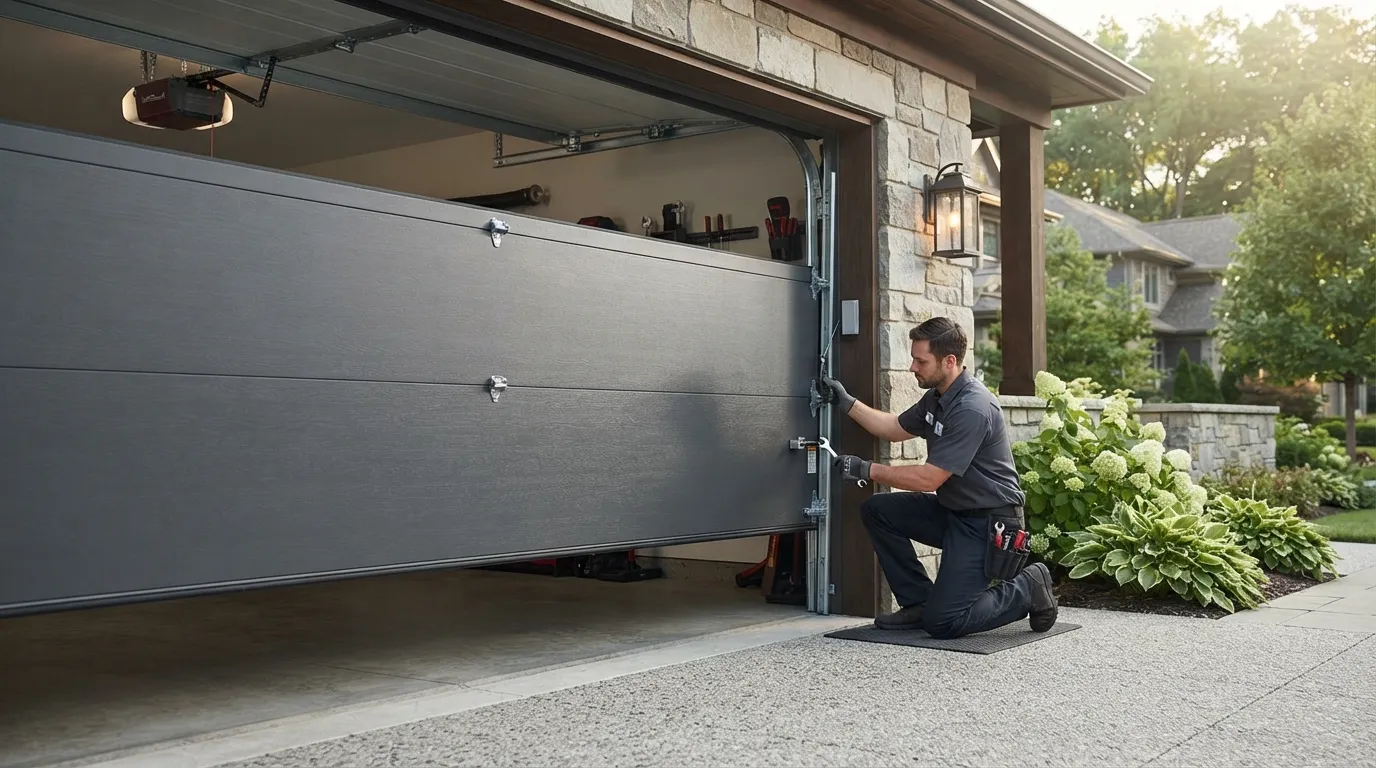
A door built when Carpentersville was filling in with new construction in the mid-to-late 1970s almost always runs on steel roller track with extension springs mounted overhead, not the torsion bar and drum setup that's standard on anything built after the mid-90s. When that track knocks loose from the wall bracket, or a roller wears its groove wide and hops the rail, the fix usually means a new bracket, a section of rolled track sized to the original door width, and rollers that match the stem length used on that era of hardware - nylon if the homeowner wants quiet, steel if the door's heavy and steel rollers were what came with it. We carry both. What we don't carry on the truck is exotic replacement track for doors that were custom-sized outside standard widths; those we order and come back for, which we'll tell you up front rather than have you wait around.
Timing
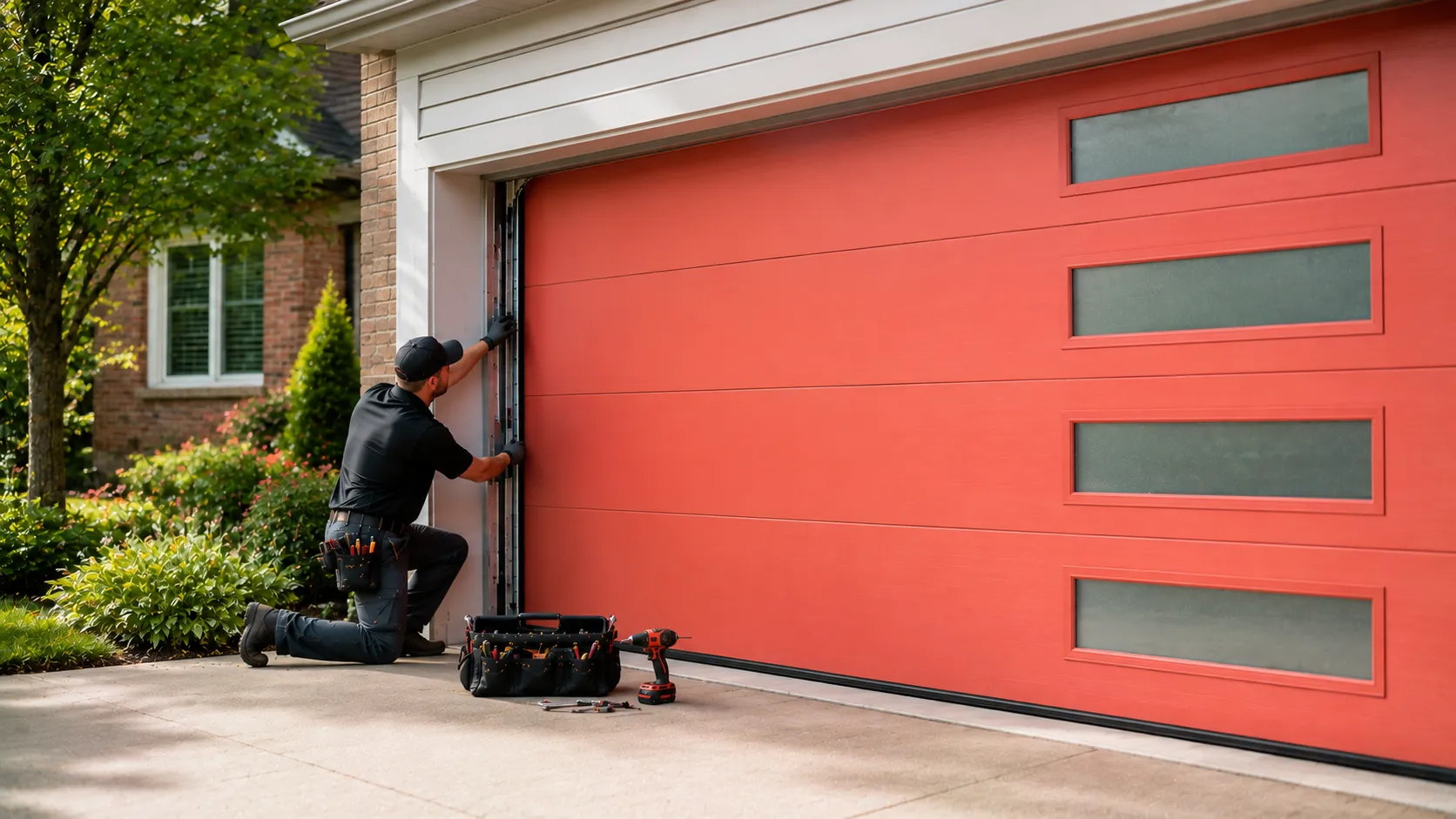
Most off-track calls on a house from this era are a same-visit fix once we're on site - bend the track back, reset it plumb, swap the worn rollers, and check the cable drums for wear at the same time, since a frayed cable is often what let the door swing off line in the first place.
Bent track that's kinked badly enough to need a full replacement section runs longer because we're cutting and drilling to match the original hole pattern.
We travel the roughly six miles out from Elgin for every call here, so we don't keep spare track pre-cut to Carpentersville dimensions on the truck - if your door needs a custom length we'll confirm it before we load up.
Local causes
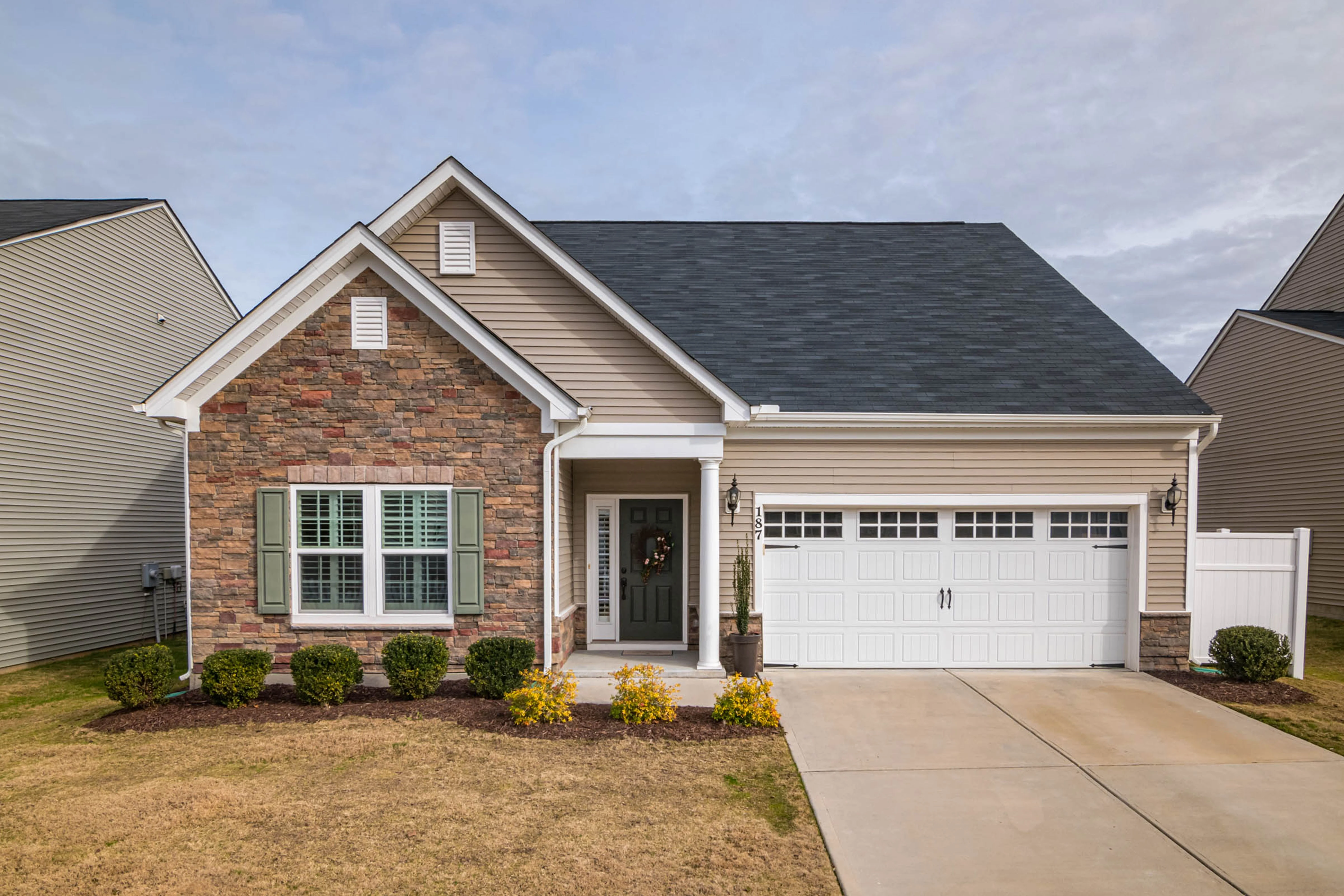
With a median build year around 1977, a lot of Carpentersville garages still have the original wall brackets holding the vertical track, and forty-plus years of freeze-thaw cycling in this climate loosens the lag screws that hold those brackets to the framing. Add a slab that's settled a little unevenly, which is common on houses this age, and the track ends up a few degrees out of plumb - enough that a heavier door or one with a weak spring starts riding the edge of the roller instead of the center, and eventually jumps the track completely. Newer torsion-spring doors in this same area tolerate that kind of minor misalignment better because the drum keeps tension even; the older extension-spring, roller-track combination doesn't forgive it.
Warning signs
The door will usually still open partway, then bind or grind against the track on one side - you'll hear a scraping sound instead of the usual smooth roll. Sometimes it's more sudden: the door comes down at an angle and the bottom corner catches the frame instead of seating flat on the slab. On older extension-spring setups specifically, watch for a cable that's gone slack on one side while the other stays taut - that's usually the tell that a roller has already left the track and the door is hanging cockeyed on one cable alone. Don't force the opener through it; running the motor against a jammed track is how a bent track becomes a bent track plus a stripped gear.
Booking
Call or use the request form and tell us the door's off track and roughly how old the house is - that one detail helps us guess whether we're dealing with extension-spring roller hardware or a later torsion setup, and load the right parts before we leave Elgin.
We don't run a branch in Carpentersville, so every job here starts with that six-mile drive; there's no separate local crew to dispatch faster, just the one truck route.
If your door is fully off both sides and won't close, say so when you call - we'll bump the parts we bring accordingly.
The repair
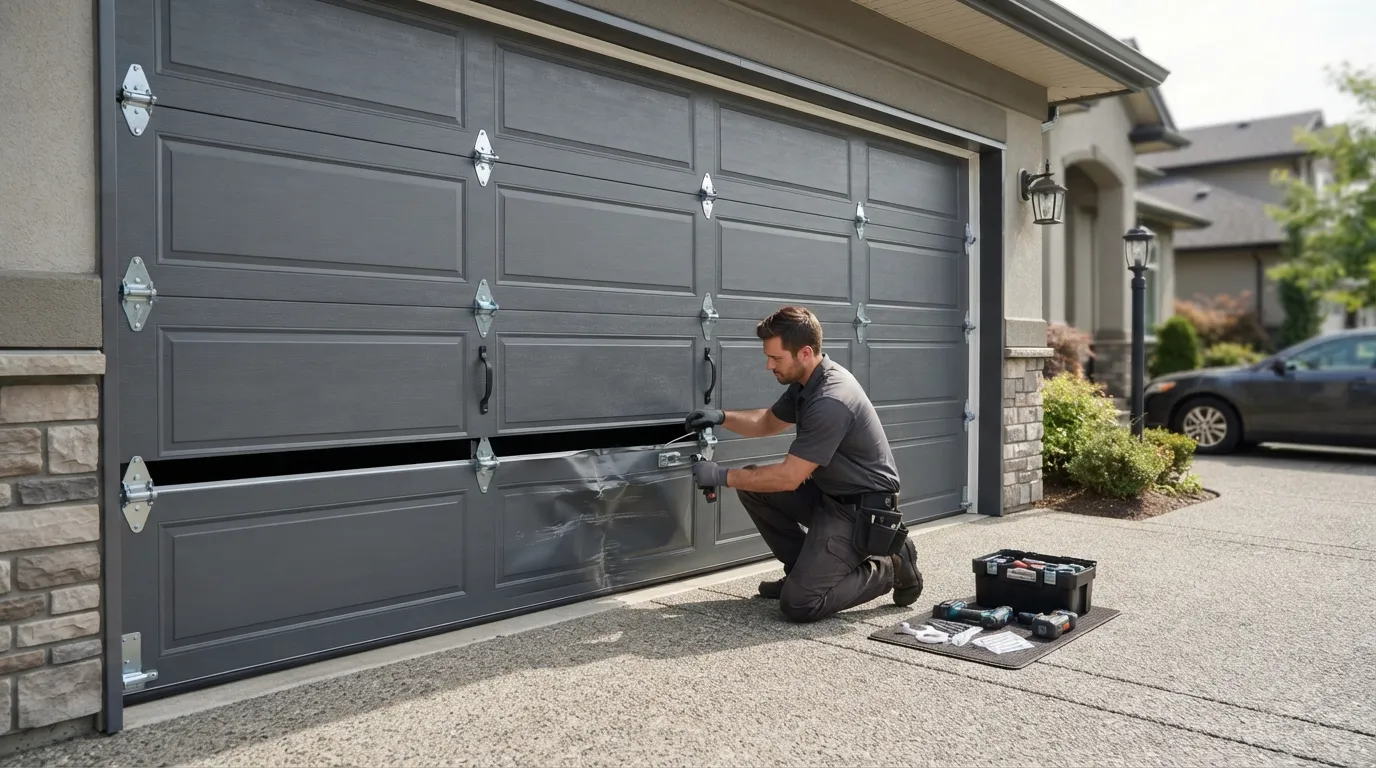
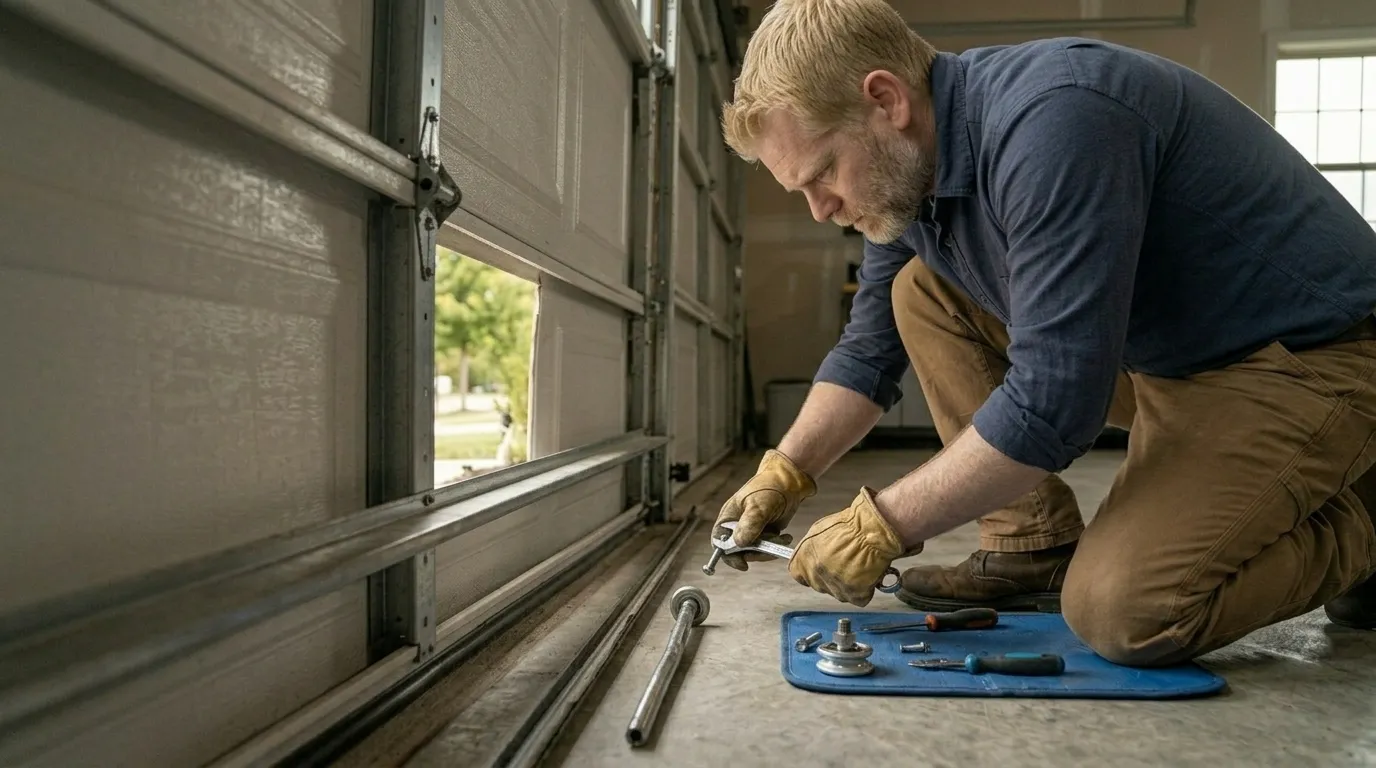
We start by killing power to the opener so nobody's fighting a motor while we work. Then we check whether the track is just knocked loose from its bracket - a common result on 1970s-era wall framing that's loosened over the decades - or actually bent, which changes the job from a re-set to a track swap. We re-square the track against the door's roller path, tighten or replace the wall brackets, swap any rollers that are chewed up, and run the door manually before we ever restore power to the opener, to make sure it travels straight on its own. If the spring itself is original to a 1970s door, we'll flag it - a spring that old is usually near the end of its cycle life regardless of the track issue, and fixing the track without mentioning that isn't doing the job right.
Questions
No. On a house this age it's often a loose or bent wall bracket holding the roller track, not the spring. The spring matters if it's original and near end of life, but a lot of off-track calls here are strictly a track and roller problem that we fix without touching the spring.
No, we run out of Elgin and drive the roughly six miles to Carpentersville for every call. There's no local branch, so response depends on the one truck route rather than a separate dispatch point in town.
Only if the track is actually bent or the bracket holes have torn out of the framing. Most off-track calls on 1970s-era houses here are a re-set and roller swap, which is faster and cheaper than a track replacement.
Explore more
Ready when you are
Elgin Garage Door Pros repairs and installs garage doors, springs and openers in Elgin, IL and the surrounding area.